
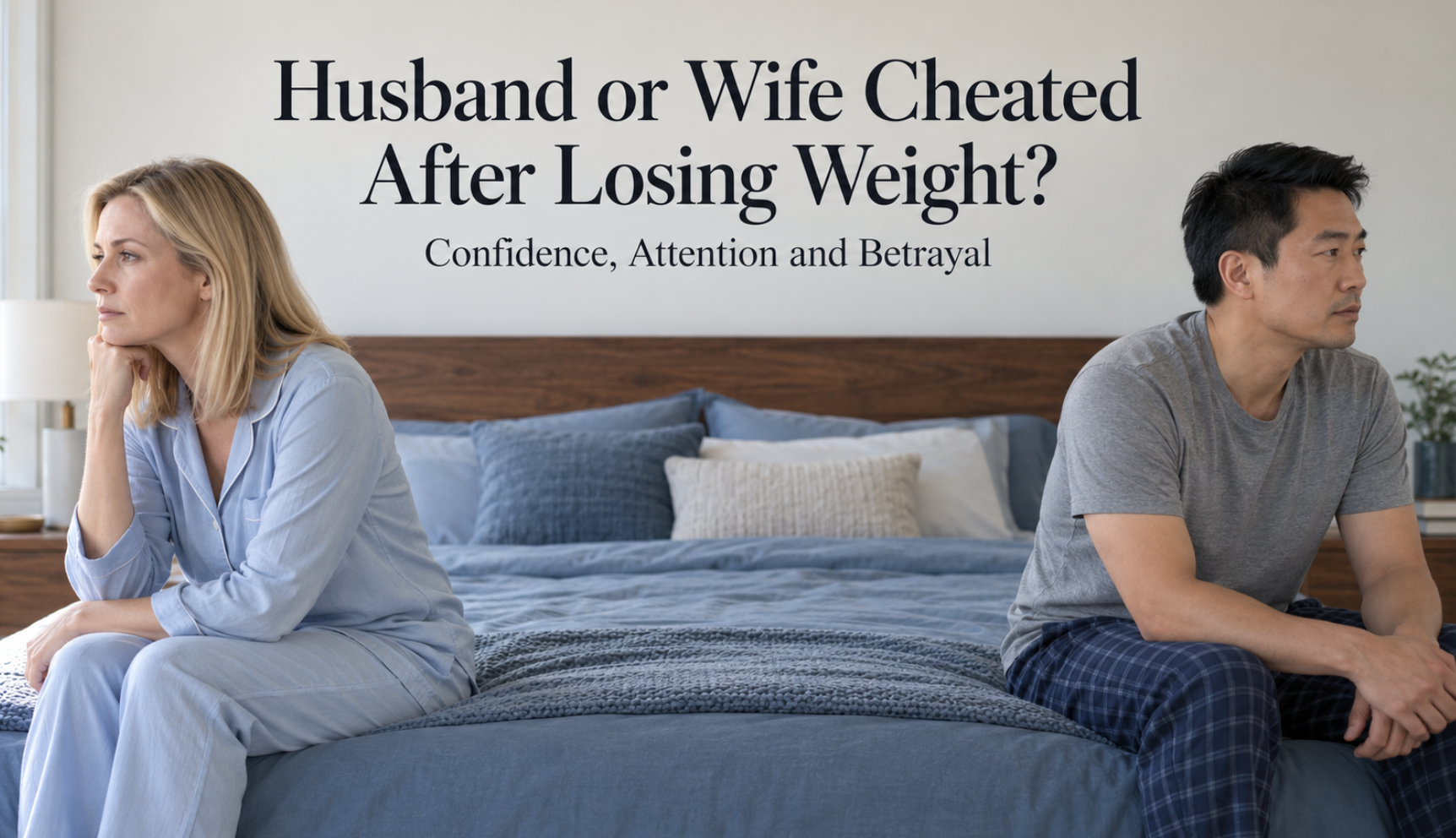
Husband or Wife Cheated After Losing Weight?
Husband or Wife Cheated After Losing Weight? Understanding Confidence, Attention and Betrayal
You encouraged them. You noticed their progress, supported their new routine and wanted them to feel good about themselves.
Perhaps your husband started going to the gym, lost weight, changed his clothes or invested in a hair transplant. Perhaps your wife became fitter, had cosmetic treatments and seemed happier with her appearance.
At first, you were pleased for them. You may even have felt excited about what their growing confidence could bring to your relationship.
Then you discovered the messages. The secret meetings. The relationship you knew nothing about.
Now you are left thinking: “My husband cheated after losing weight,” or “My wife lost weight and cheated. How did we get here?”
Alongside the betrayal, there can be a particularly painful feeling: I supported you through this change. Now someone else is getting your attention, affection and desire.
You may wonder whether they believe they have outgrown you. Whether your years together suddenly mean less. Whether they used your encouragement to build a life that excludes you.
Those questions deserve care and honest answers.
In my work supporting people through infidelity, I regularly hear about affairs that happened alongside a significant change in appearance or confidence. Understanding what happened matters. So does deciding what you both want now—and whether you are willing to do the work that rebuilding requires.
When a physical transformation changes the relationship
A change in appearance can feel like the beginning of a new chapter.
Someone who previously felt uncomfortable in their body may start enjoying clothes, photographs, social occasions or attention they once avoided. They may feel more attractive, outgoing or sexually confident.
The changes can involve weight loss, fitness or cosmetic procedures. A husband might invest in a hair transplant, Botox, fillers or a new gym routine, sometimes alongside peptides or steroids. A wife might lose weight or choose a facelift, breast surgery, lip treatments or a different style.
None of these choices establishes that someone is cheating. What matters is how they behave as their confidence grows.
Do they bring that energy into the relationship? Do they remain honest and considerate? Or do they start cultivating secret connections and treating relationship boundaries as obstacles?
Greater confidence does not remove responsibility for how someone treats their partner.
Why can increased confidence become connected with cheating?
There is no single explanation. However, several patterns can be worth exploring after an affair has been discovered.
New attention becomes a source of validation
Compliments may feel particularly powerful to someone who spent years feeling unattractive or overlooked.
They begin looking forward to a particular person noticing them. A conversation becomes flirtatious. Messages become more personal. They hide the contact because they know their partner would feel hurt.
Attention can become something they keep seeking, even as the secrecy damages their marriage.
They want to explore a different version of themselves
A physical transformation can bring questions about identity: Who am I now? What have I missed? What else could my life be like?
Those questions can be explored honestly within a relationship. Sometimes, however, a person explores them through a hidden sexual or emotional life.
Their partner is then left facing changes they were never given the opportunity to discuss.
They give themselves permission to cross boundaries
Someone may tell themselves they deserve excitement after years of hard work or feeling insecure. They may minimise flirting, private messages or sexual contact because they do not want to confront the consequences.
Understanding those explanations can help clarify what needs to change. It does not excuse the decisions involved.
If your husband or wife cheated after losing weight, the deeper work is understanding their relationship with attention, honesty, boundaries and responsibility.
Why this betrayal can hurt your confidence so deeply
You may find yourself comparing your appearance with theirs—or with the person they cheated with.
Perhaps you now feel uncomfortable when your partner dresses up. A gym visit, cosmetic appointment or night out brings back the fear of what you discovered.
You might feel an urge to lose weight yourself, change your face or body, or become more sexually available so they will not stray again.
Before making those choices, ask yourself:
“Is this something I want for myself, or am I trying to make myself impossible to betray?”
You cannot make another person faithful by becoming more attractive, accommodating or attentive.
If you have been searching “my wife cheated after losing weight” or “my husband cheated after losing weight,” you may be looking for an explanation that makes the pain feel less personal.
Their decision to cheat does not establish that you were inadequate. Any relationship difficulties can be explored, but responsibility for the deception belongs to the person who chose it.
After discovery, work out what you both want
Once cheating is discovered, it is understandable to want certainty immediately.
“Do you love me?”
“Are you staying?”
“Can I ever trust you again?”
Yet an immediate promise does not answer every question about the future.
You both need to consider what you want. Does the person who cheated genuinely want the relationship, including the responsibility of repairing it? Does the betrayed partner want to explore rebuilding, even if they cannot promise an outcome yet?
Useful questions include:
- Has the affair or inappropriate contact ended?
- Are there further secrets that could affect our decisions?
- Are we both willing to look honestly at what happened?
- What would commitment look like in our daily behaviour?
- What does each of us need before deciding whether to continue?
You can choose to explore reconciliation without promising that everything will be fine. You can also need time before knowing what you want.
Through marriage and relationship counseling in Dubai, I help couples have these conversations and understand whether they share a willingness to rebuild.
Can trust be rebuilt after cheating?
Yes, trust can be rebuilt when both people are committed—but it takes remorse, effort, empathy and consistent loving actions.
Love may be part of the reason you want to stay. Repair requires you to put that love into behaviour.
Remorse: recognising the hurt caused
Remorse involves understanding the impact of the betrayal, rather than focusing only on the consequences of being caught.
It means being willing to hear:
“I supported you, and now I feel as though I was being deceived while you were building your confidence.”
The person who cheated needs to make room for that pain without immediately defending themselves or demanding reassurance.
Effort: taking responsibility for repair
The betrayed partner should not have to organise every conversation, request every reassurance and monitor every agreement.
The person who cheated can take initiative: arranging support, keeping commitments, addressing inappropriate contact and following through on agreed changes.
Effort becomes meaningful when it continues beyond the immediate fear of losing the relationship.
Empathy: understanding why reassurance is still needed
A partner may feel relatively calm one day and distressed the next. Something ordinary may bring back a memory or unanswered question.
An empathetic response might be:
“I understand why that worried you after what happened. What would help us talk about it?”
Repeated dismissal—“We’ve already discussed this”—can make it harder for the injured partner to feel understood.
Loving actions: making care visible
Loving actions need to connect with the hurt that occurred.
They may include being dependable, making time together, showing affection without pressure, answering questions honestly and honouring agreements about contact with others.
Ask:
“What could I do consistently that would help you feel considered and cared for?”
Then follow through. Trust grows when experience repeatedly supports what has been promised.
Agree on boundaries around attention and contact
After an affair connected with new attention or social opportunities, vague promises to “behave” may leave both people uncertain.
Discuss what fidelity means in your relationship. That might include flirting, private messages, dating apps, contact with the affair partner, paid sexual contact and what information you agree to share.
These conversations need to be specific enough to guide behaviour. Any agreed transparency should have a clear purpose and be reviewed together, rather than becoming an indefinite arrangement in which one partner must constantly investigate.
The aim is for honesty and consideration to become dependable parts of the relationship.
Rebuilding intimacy after your confidence has been shaken
You may want reassurance through sex, avoid intimacy altogether, or move between both feelings.
Being physically close can bring up comparisons and questions about whether your partner is truly present with you.
Talk about what feels welcome. Affection, conversation and time together can help you explore closeness without using sex as proof that the relationship has recovered.
My intimacy and sex coaching offers space to discuss these sensitive concerns. Individual counseling can also help you process the betrayal and reconnect with your own needs.
Confidential support after cheating
I’m Nicola Beer, a relationship counsellor and affair recovery specialist with more than 15 years of experience supporting individuals and couples.
My work covers the spectrum of betrayal: behaviour often described as microcheating, secret messages and emotional affairs, sexual contact with sex workers, and ongoing affairs. I offer a confidential, compassionate space to discuss what happened, including experiences that feel difficult or embarrassing to explain.
Through affair recovery counseling in Dubai, we can explore the impact of the betrayal, clarify what you both want and identify the actions needed for repair. I also offer couples therapy in Dubai and online relationship support for clients in Abu Dhabi and internationally.
If your husband or wife cheated after losing weight, your future does not have to be decided by the shock of discovery alone. With honesty, support and a genuine commitment from both people, you can explore whether a trusting, loving relationship can be rebuilt.
Book your session with Nicola Beer for individual support, couples therapy in Dubai or online affair recovery counseling.
Rebuilding starts with deciding what you both want. It moves forward through remorse, effort, empathy and loving actions you can rely on.